
10 Cooking Safety Tips Every Home Cook Must Know

Cooking safety is as important as cooking delicious food. It’s normal to encounter common kitchen mishaps while cooking, such as burns, cuts, slips, or spills. However, sometimes these common mishaps can lead to big accidents due to a lack of awareness. And when we have an encounter with any such accident, we start looking for cooking safety tips.
But why wait for any such accident and then look for cooking safety tips? Why not take precautions beforehand and avoid such accidents while cooking?
Cooking is often regarded as a proven stress reliever; it brings mindfulness and a sense of accomplishment. But if safety tips are not followed, then the happy cooking scene can turn into a stressful chore.So that’s why understanding the basic cooking safety tips is crucial for every home cook.
In this guide, we will uncover 10 cooking safety tips that will help you to avoid any accidents in the kitchen while cooking.
Cooking Safety Tips # 1: Keep the Cooking Space Clean
A clean kitchen is one of the simplest ways to stay safe while cooking. A clean cooking space prevents cross-contamination and ensures that you are cooking in a safe and healthy environment. Before starting cooking, declutter the countertops so that you have enough space to cook comfortably.
Clean countertops and utensils before using them to prevent foodborne illnesses. Most importantly, clean your hands before and after you have completed the cooking. Wipe down the surface and any spills, as leaving them as they are could lead to accidental falls and slips.
A clean kitchen is a healthy kitchen; it’s not just about cleaning the cooking space but maintaining a hygienic environment while cooking.
So next time when you come into the kitchen for cooking, make sure to first clean the cooking space.
Cooking Safety Tips # 2: Wear Proper Kitchen Attire
While cooking in the kitchen, it’s important that you wear proper kitchen attire to protect yourself from accidents. To do you, you should:
- Always wear an apron to reduce the risk of burns or stains on your clothes.
- Wear such clothes which have fitted sleeves instead of loose sleeves as the loose ones can easily ignite over flame and cause accidents.
- Wear heat resistant cooking gloves when dealing with hot pans.
- Wear a toque blanche as it helps to maintain hygiene by keeping the hair covered so it doesn’t fall into the food. Also, it easily absorbs the heat and sweat, which keeps you comfortable while cooking.
- Wear closed-toe shoes to protect your feet from spills.
Cooking Safety Tips # 3: Wash the Utensils Properly
Keep your utensils clean and wash them properly to protect them from germs. It’s very important that the utensils you are using for cooking are clean to ensure safe and healthy cooking. Washing the utensils properly before and after cooking will help you avoid health-related issues.
Always clean your knives, cutting boards and other utensils when they have come into direct contact with raw food like meat, chicken, fish, etc. Do sanitize utensils after they come in contact with raw food to remove the odour from the utensils. Use hot water to clean such utensils to remove grease and bacteria.
Cooking Safety Tips # 4: Sharpen Your Knives
Before you start to cook, it is important to sharpen the knives that you will be using for cutting and chopping. A dull knife can easily slip and cause cuts or injuries to fingers and hands.
Whereas a sharp knife gives you better control while cutting, it also helps in precise cutting and chopping. So you should regularly sharpen your knives to avoid accidents.
Along with sharpening your knives, you should know which type of knife to use for which task.
- Chef’s Knife: Use it for chopping fruits, vegetables and meat, slicing and dicing.
- Paring Knife: Use it for trimming, peeling and tasks like removing seed or deveining shrimp.
- Bread Knife: Use it for cutting breads, cakes and soft skinned foods.
- Boning Knife: Use it for removing skin from chicken, meat, fish, etc.
- Utility Knife: Use it for slicing fruits, vegetables and sandwiches.
Cooking Safety Tips # 5: Practice Safe Cutting Techniques
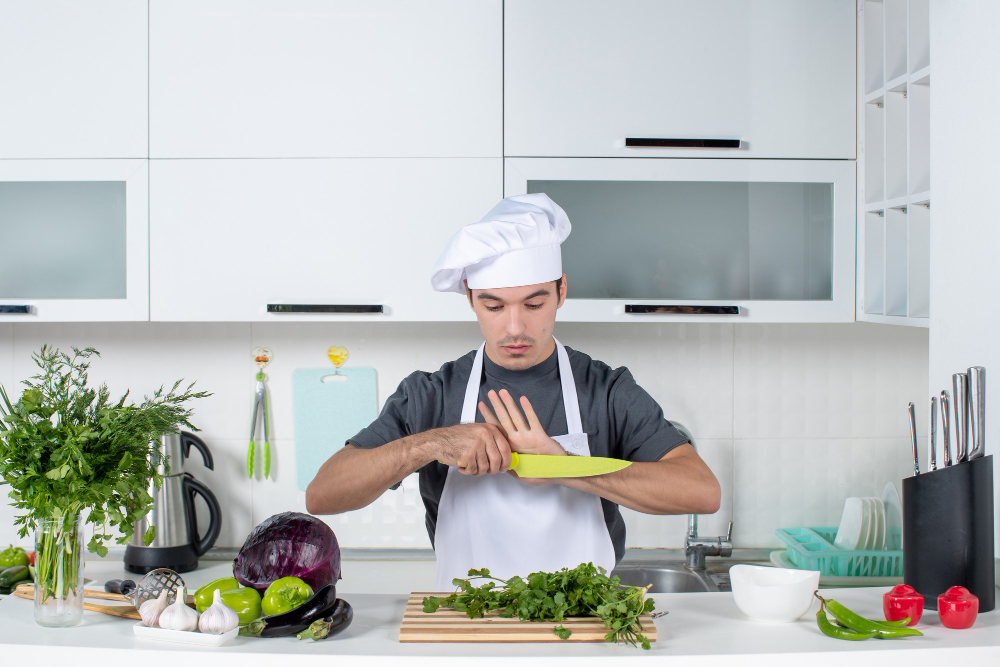
While cooking, adapt safe cutting techniques to avoid any cuts on your finger or any other accident. Stay focused, and try to avoid distractions while cooking or chopping. Follow the safety guidelines, especially when dealing with sharp tools like knives.
Always hold the knife firmly to maintain a strong grip and control when cutting. Try to use a sturdy cutting board that won’t slip. It’s best to use a wooden cutting board for extra stability. In addition to this, watch YouTube tutorials to understand and learn different knife handling techniques.
Cooking Safety Tips # 6: Do Not Leave Cooking Station Unattended
Never leave your cooking station unattended, and try to cook with a focus. Unattended cooking can lead to accidents in the kitchen. Even a short lapse in attention can lead to big accidents, so you have to stay very attentive.
If you leave the food on the stove with a gas burner unattended, the food may boil over time, and the oil may get extra hot, which can result in dangerous accidents and flames spreading all around the home. To be on the safe side, it’s good if you set reminders or alarms in case you have to leave the cooking station.
So it’s important to stay alert in the kitchen at all times and avoid any distractions so that you can respond to any unexpected situation in a timely manner.
Cooking Safety Tips # 7: Keep Flammable Items Away From Heat
Keep the flammable items away from heat to avoid fires.
To do so, you avoid placing the following things near open flame or on the hot stove top:
- Paper/Paper Tissue
- Kitchen Towels
- Plastic Utensils
- Wooden Utensils
You should arrange your counter top in such a way that all flammable items are away from the fire. Doing so will not only prevent fire accidents but also ensure a safe cooking environment for you.
Cooking Safety Tips # 8: Handle Hot Food Carefully
Always handle the hot food with extra care to avoid burns or other accidents. Use heat-resistant gloves, kitchen towels when pouring food from the pot into the dish. When using an oven for cooking, always use oven mitts to place the food inside the oven and to take it out of the oven.
Move the hot dishes with care and allow the food to rest for a minute when it is extremely hot. Weh heating the oil, make sure that it does not get overheated, as very hot oil can easily catch fire. During cooking, if a grease fire occurs, do not pour water on it; instead, use a fire extinguisher.
Cooking Safety Tips # 9: Use Utensils and Appliances Safely
When cooking, always handle the utensils and appliances safely. Handle the utensils, especially the glass utensils, with extra care. Use proper utensil handling techniques to avoid burns or slips.
Ensure the pots are placed properly on the stovetop. When opening a hot food lid and always lift the lid away from the face to avoid face burn by steam. In addition to this, when handling the kitchen appliances, always read the manual first and follow the instructions. Do not use an appliance you are not familiar with.
Cooking Safety Tips # 10: Prevent Electrical Hazards
Preventing electrical hazards is another important cooking safety tip that every home cook must know.
To prevent the electrical hazards in the kitchen, you should :
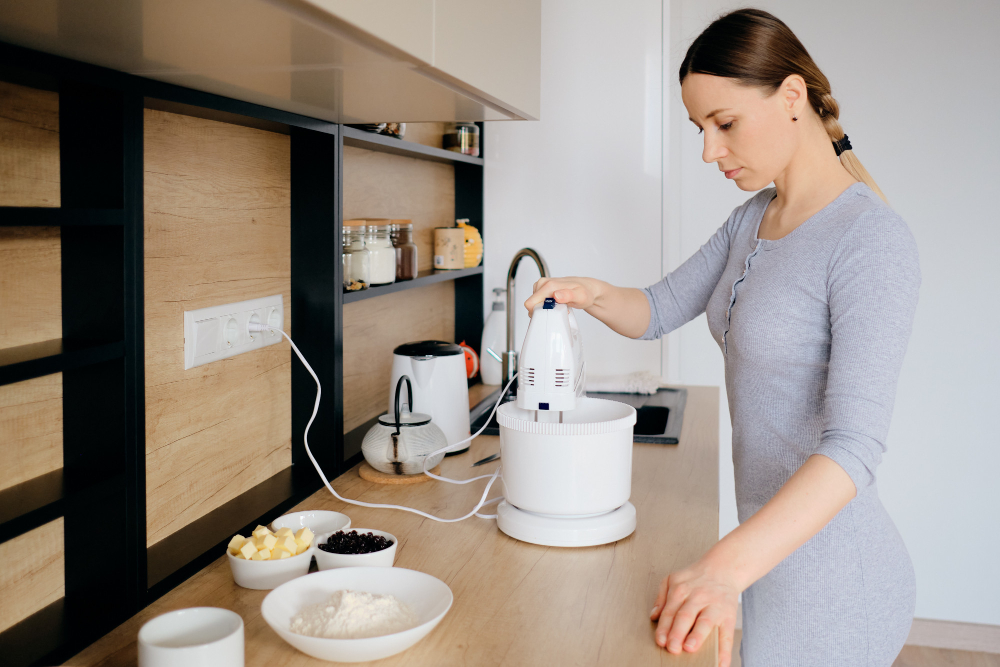
- Never overload the power supply with too many appliances; try to use one appliance at a time.
- Never keep the electrical appliances on wet surfaces.
- Never use the electrical appliances when your hands are wet.
- Unplug the appliances as soon as you have used them.
- Follow the manual instructions when handling the electrical appliances to prevent short circuits or other accidents.
- Regularly inspect the cords for damage.
Along with following these cooking safety tips, keep yourself informed for first aid and place a first aid box in your kitchen because accidents can happen at any time.
Cooking safety is not just about preventing mishaps and the kitchen; it’s about creating a stress-free and enjoyable cooking experience. By following the cooking safety tips, you do not just protect yourself but also your family and surroundings. So, more than safety, it’s a responsibility to protect yourself and your surroundings, as a small mishap can lead to big accidents.
From now on, no more worries…as you have this easy guide to 10 cooking safety tips, you can cook in the kitchen without the fear of any accidents.
Want more practical guides for your kitchen? Explore our Kitchen Guides.